How I Turned Art Into Assets Without Losing My Shirt
Ever looked at a painting and wondered if it could pay your bills? I did. What started as a love for art turned into a real financial strategy—but not without costly mistakes. I bought high, sold low, and once got stuck with a piece no one wanted. Over time, I learned how art can be more than decoration—it can be part of smart financial planning. This is how I built value, not just a collection. Art offers emotional reward, cultural significance, and, when approached thoughtfully, financial potential. But turning passion into profit requires discipline, research, and a clear-eyed understanding of risk. The journey from casual buyer to strategic owner wasn’t easy, but it reshaped how I view wealth, ownership, and long-term value creation.
The Allure and Illusion of Art Investing
Art investing often captures the imagination with tales of sudden windfalls—paintings bought for modest sums and later auctioned for millions. Media stories highlight record-breaking sales, such as a contemporary work fetching tens of millions at a major auction house, fueling the belief that art is a fast track to wealth. For many, including myself in the early days, the idea of owning something beautiful that also appreciates in value seems like the perfect blend of passion and pragmatism. Yet beneath the surface glamour lies a market governed less by predictable economic forces and more by subjective tastes, cultural trends, and timing. Unlike stocks or bonds, art does not generate regular income. It does not pay dividends or interest. Its value is realized only when it is sold, and that moment may not come when you need it most.
I once held onto a piece for years, convinced its value would rise simply because I loved it. When I finally decided to sell, I discovered that the market had moved on. The artist’s popularity had waned, and demand was minimal. What I thought was an appreciating asset had become illiquid—a costly reminder that emotional attachment is not a financial strategy. The truth is, most artworks do not increase in value over time. According to long-term studies of art market performance, the average return on art as an asset class is modest when compared to equities, and highly concentrated among a small fraction of established artists. The top tier—names represented by major galleries, featured in museum collections, and supported by strong provenance—tends to drive nearly all the gains, while the vast majority of works remain flat or depreciate.
Understanding this distinction is essential. Art should not be treated as a primary investment vehicle unless approached with the same rigor as any other financial decision. The mindset shift required is profound: from being a collector driven by personal taste to becoming a strategic owner who evaluates each acquisition through both aesthetic and economic lenses. This means asking not only “Do I love this?” but also “What factors support its long-term value?” and “Can I afford to hold this without compromising my financial stability?” Recognizing the emotional pull of art while maintaining financial discipline is the first step toward building a collection that holds real worth.
Financial Planning: Building a Foundation Before Buying
Before spending a single dollar on art, I learned that financial readiness is non-negotiable. Jumping into the art market without a solid financial foundation is akin to building a house on sand—no matter how beautiful the structure, it cannot withstand pressure. My early attempts at collecting were fueled by enthusiasm, not planning. I used discretionary income meant for savings, dipped into emergency funds, and even financed purchases on credit cards with high interest rates. It didn’t take long for reality to set in: when unexpected expenses arose, I was forced to sell pieces at a loss, undermining both my financial health and confidence in art as an asset.
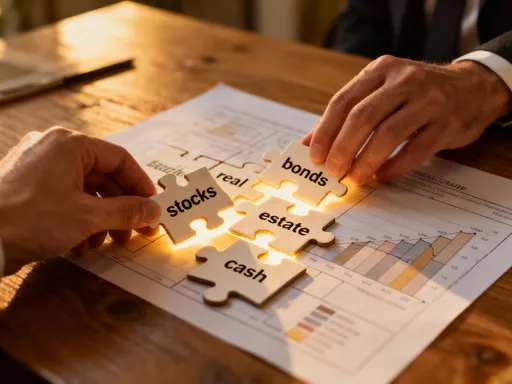
The turning point came when I stepped back and assessed my overall financial picture. I began by paying off high-interest debt, which immediately freed up cash flow and reduced financial stress. Next, I rebuilt a fully funded emergency reserve—enough to cover at least six months of essential living expenses. Only then did I revisit the idea of art acquisition. This foundation allowed me to allocate a small, predetermined portion of my portfolio toward alternative assets without jeopardizing my long-term goals. Financial advisors often recommend that alternative investments, including art, make up no more than 5% to 10% of a well-diversified portfolio, especially for individuals without significant excess wealth. This guideline helped me define clear boundaries and avoid overcommitting.
Setting objectives was equally important. Was I buying for personal enjoyment, cultural engagement, or long-term value growth? Each goal carries different implications. If the primary aim is emotional satisfaction, then financial return becomes secondary, and spending should reflect what one can comfortably afford to lose. If, however, the intention includes wealth preservation or appreciation, then research, documentation, and market awareness become critical. I also reviewed my retirement planning, ensuring that contributions to tax-advantaged accounts like IRAs and 401(k)s remained on track. Art should enhance financial well-being, not undermine it. By establishing a strong base first, I transformed my approach from impulsive buying to intentional ownership—one that aligns with broader financial security.
How to Pick Art That Holds (or Grows) Value
One of the most painful lessons I learned was that not all art appreciates—and in fact, most does not. I once purchased a piece by a then-trending artist whose work was gaining attention in niche galleries. The price had risen quickly over a few months, and I assumed the momentum would continue. Within two years, however, the artist faded from public view, new collectors lost interest, and the secondary market for their work dried up. What I had hoped would be a valuable holding became nearly impossible to sell at any price close to what I paid. This experience taught me that value in the art world is not automatic; it must be supported by concrete factors beyond fleeting popularity.
To improve my selection process, I began focusing on artists with strong provenance—verifiable histories of exhibition, representation by reputable galleries, inclusion in public or institutional collections, and critical recognition. These indicators signal sustained relevance and demand. Auction records, available through public databases and market reports, became essential tools in evaluating price trends and liquidity. I also paid closer attention to scarcity. Limited editions, unique works, and artists with low output tend to maintain or increase value over time, while mass-produced or widely available pieces often depreciate due to oversupply. Condition is another crucial factor: damage, poor restoration, or improper storage can drastically reduce a work’s worth, even if the artist is well-regarded.
Authenticity and documentation are equally vital. A certificate of authenticity, gallery receipt, or exhibition history can make the difference between a smooth sale and a rejected offer. I now insist on complete paperwork before acquiring any piece, especially when buying from private sellers or secondary markets. I also learned to balance personal taste with market awareness. While it’s important to live with art that resonates emotionally, doing so without regard for its long-term viability can lead to financial disappointment. Today, I approach each purchase as a combination of heart and analysis—choosing works I love, but only after confirming they meet objective criteria for durability and demand. This dual filter has significantly improved both the quality and resilience of my collection.
Risk Control: Diversification and Exit Strategies
One of the greatest risks in art investing is overconcentration—placing too much capital into a single artist, style, or period. Early on, I became enamored with a particular movement and invested heavily in it, convinced that its cultural significance would ensure lasting value. When market interest slowed and prices stagnated, I found myself holding a large portion of my alternative assets in an illiquid category with limited buyer appeal. This lack of diversification amplified my exposure and reduced my flexibility. I had tied my financial hopes to a narrow segment of the market, leaving me vulnerable to shifts in taste or economic downturns.
To mitigate this risk, I adopted a strategy of measured diversification. Instead of making large bets on individual pieces, I began allocating smaller amounts across different genres, media, and emerging artists. This approach mirrors principles used in traditional investing, where spreading exposure reduces the impact of any single underperformer. I set limits on how much I would spend per artist or category, ensuring no single holding could dominate my portfolio. Each acquisition became a calculated experiment—an opportunity to support new talent while managing downside risk. Over time, some of these smaller investments gained traction, providing returns that offset losses elsewhere.
Equally important was developing exit strategies before making purchases. Too often, collectors buy with passion but fail to plan for sale. I now ask myself: Who is the likely buyer for this piece? Is there an active secondary market? What channels—galleries, auctions, private dealers—would be most effective for resale? Understanding these factors in advance helps me avoid emotional attachment that might cloud judgment later. I also accept that not every acquisition will succeed. Holding onto a losing piece out of pride or sentimentality only prolongs the loss. Knowing when to let go, and having a plan for doing so, is a key component of responsible ownership. By treating art as part of a broader financial ecosystem, I’ve learned to manage risk with clarity and discipline.
Hidden Costs: Insurance, Storage, and Transaction Fees
One of the most underestimated aspects of art ownership is the ongoing cost of preservation and transaction. When I first started collecting, I focused almost entirely on purchase price, failing to account for the expenses that accumulate over time. I soon discovered that insuring valuable works requires specialized policies that consider provenance, condition, and market value—premiums that can run into thousands of dollars annually for even a modest collection. Standard homeowner’s insurance often provides inadequate coverage, leaving collectors exposed to significant risk in the event of damage or loss.
Storage is another major consideration. Art must be kept in stable environments—protected from sunlight, humidity, and temperature fluctuations. For larger or more sensitive works, climate-controlled storage facilities are necessary, and these come at a cost. I once stored a canvas in a basement during a home renovation, only to find mold developing on the surface weeks later. Restoration cost more than the annual insurance premium I had avoided. Proper handling, framing, and transportation also add to expenses, especially when moving works between homes, galleries, or auction houses.
Transaction fees are perhaps the most impactful hidden cost. When selling through an auction house, commissions can range from 15% to 25% of the final sale price. Private dealers may charge similar markups. These fees directly reduce net returns, turning what appears to be a profitable sale into a break-even or even losing proposition. I now factor all these costs into my acquisition decisions, calculating not just what a piece costs to buy, but what it will cost to own and eventually sell. Budgeting for insurance, storage, and transaction fees ensures a more accurate picture of true return on investment. Ignoring these elements can transform a seemingly wise purchase into a financial burden.
Tax Implications and Estate Considerations
Art ownership introduces complex tax and inheritance issues that many collectors overlook until it’s too late. When I sold my first significant piece at a profit, I was unprepared for the capital gains tax liability that followed. Unlike stocks, where cost basis and holding periods are clearly tracked, art often lacks formal documentation, making tax reporting more complicated. In the United States, long-term capital gains on collectibles—including art—are taxed at a higher rate than those on equities, currently up to 28%. This means that even a successful sale can result in a substantial tax bill, reducing net proceeds significantly.
Estate planning presents another layer of complexity. Art collections can become sources of family conflict if ownership and intent are not clearly documented. Without a will or trust specifying how works should be distributed, heirs may dispute allocations, leading to legal challenges or forced sales at unfavorable prices. I learned this the hard way after a relative passed without instructions, leaving behind a collection that had to be appraised and divided under stressful conditions. To prevent this, I now maintain a detailed inventory of my collection, including photographs, provenance records, appraisals, and acquisition costs. This documentation supports accurate tax reporting and smooth transfer to beneficiaries.
I also explored charitable giving as a strategy. Donating art to qualified museums or nonprofit organizations can provide income tax deductions based on fair market value, while also ensuring the work is preserved and accessible. However, strict IRS rules apply, including requirements for independent appraisals and substantiation. Consulting with a tax professional before any donation is essential. By addressing tax and estate issues proactively, I’ve gained peace of mind knowing that my collection will be managed responsibly, both during my lifetime and beyond.
When Art Meets Wealth: Integrating Collections into Long-Term Financial Goals
Over time, my relationship with art has evolved from hobby to strategic asset. I no longer view my collection as a series of isolated objects, but as an integrated component of my broader financial plan. This shift in perspective has allowed me to align ownership with long-term objectives—whether funding retirement, supporting family, or contributing to cultural preservation. Regular portfolio reviews have become standard practice, helping me assess which pieces continue to hold value, which may be better suited for sale, and how my overall allocation aligns with changing goals.
I’ve come to see art not as a get-rich-quick scheme, but as a long-term store of value—one that requires patience, care, and periodic re-evaluation. Some works have appreciated significantly, providing liquidity when needed. Others remain held for their cultural or emotional significance, with no immediate plan for sale. The key has been balance: maintaining financial discipline while honoring personal connection. I now set timelines for reviewing underperforming assets and consider market conditions before making moves. This structured approach has removed emotion from decision-making and improved outcomes.
Ultimately, art can be both beautiful and financially meaningful when managed wisely. It is not a replacement for traditional investments, but a complementary element that adds depth and diversity to a well-rounded portfolio. By grounding passion in planning, controlling risk, and respecting the realities of ownership, it’s possible to build a collection that enriches life in more ways than one. The journey from impulsive buyer to thoughtful steward has taught me that true value lies not just in what a piece is worth, but in how it fits into a life of purpose and financial integrity.